At Achieve, we're committed to providing you with the most accurate, relevant and helpful financial information. While some of our content may include references to products or services we offer, our editorial integrity ensures that our experts’ opinions aren’t influenced by compensation.
Achieve Insights
How to use your tax refund to pay off debt, and finally get ahead
Apr 15, 2026

Written by
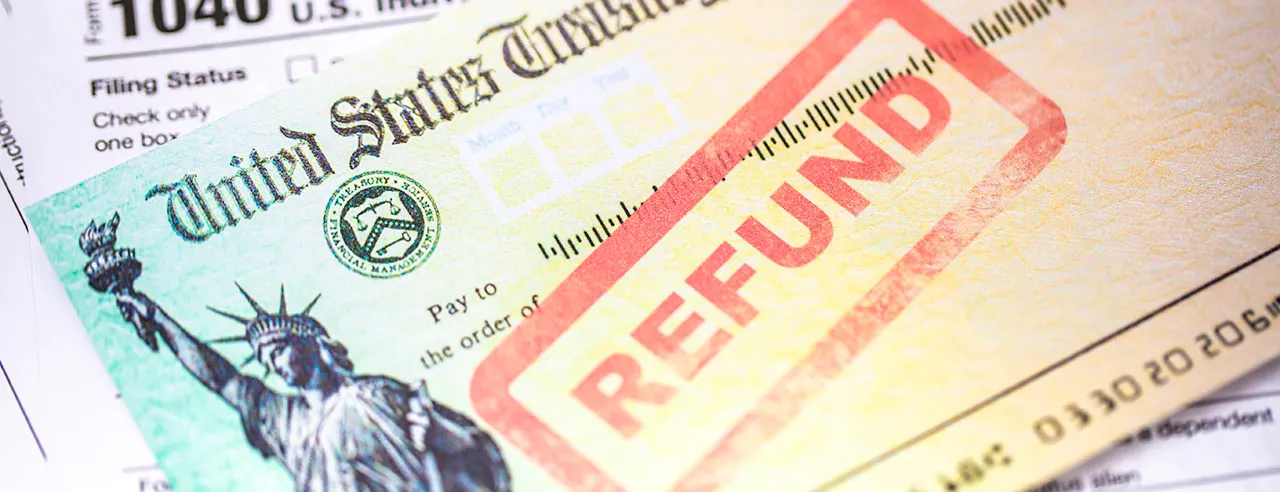
A tax refund is a powerful tool to shift from playing defense to playing offense by wiping out high-interest balances and regaining financial momentum.
Tax season acts as an annual "financial physical," highlighting the need to look beyond one-time payments toward smarter strategies like debt consolidation.
The real goal is long-term resilience, using your refund as a strategic head start to restructure debt and stay ahead for the rest of the year.
Tax season has a way of putting finances into focus.
For many households, it is the one time each year when they take a close look at income, expenses and what they owe. Credit card balances, personal loans or medical bills that may have been manageable month to month can suddenly feel more urgent when viewed all at once.
That shift in perspective matters.
For many households, using a tax refund to pay off debt is one of the most impactful financial moves of the year, and one of the most underused. At the same time, filing requirements can surface financial obligations that were not top of mind before. Forgiven debt may need to be reported as income. Interest paid on certain types of loans becomes more visible. Monthly payments that once felt routine can stand out when compared against annual earnings.
Using your tax refund to pay off debt: where to start
In many cases, tax season becomes a turning point in how people approach their debt.
This isn’t just about having extra cash in a bank account; it’s about a mental shift from playing defense to playing offense. For some, a refund is the tool they need to finally wipe out high-interest credit card balances that have been stalling their progress. For others, it’s the moment to explore tax season debt consolidation, moving away from juggling multiple bills into one predictable monthly payment. And for those facing more serious financial pressure, this season is often the catalyst to stop making interest-only payments and look into a debt settlement program that can actually reduce the total amount they owe.
Tax season debt consolidation: from playing defense to playing offense
Each of these paths reflects a different priority. One person may want to lower monthly payments to better manage essential expenses. Another may be focused on reducing interest costs over time. Someone else may want to create more financial flexibility heading into the rest of the year.
At Achieve, we often see tax season prompt people to revisit how their debt fits into their overall financial picture for the year ahead.
This annual "financial physical" often highlights the difference between simply staying afloat and actually getting ahead. We see many homeowners use this time to evaluate if tapping into their home’s equity is a smarter way to pay off high-cost debt than using a one-time refund. The real objective during tax season shouldn't just be to pay down a single balance, but to restructure a household’s finances so they are more resilient for the remaining eleven months of the year.
Smarter debt strategies that go beyond a one-time refund
Ultimately, a tax refund is a rare opportunity to break the cycle of debt, but it only works if it's paired with a clear plan. Instead of viewing tax season as a temporary fix, we should see it as a chance to reset. Whether that means using your tax refund for debt payoff, consolidating loans, utilizing home equity, or entering a structured resolution program, the goal is the same: to ensure that by this time next year, the "big picture" looks a lot brighter. The real takeaway for any consumer this spring is that a refund is a head start—but a strategy is what finishes the race.
Frequently Asked Questions
Should I use my tax refund to pay off debt?
In most cases, yes, especially if you carry high-interest credit card balances. Using your tax refund to pay off debt can reduce the total interest you pay and free up monthly cash flow. The best approach depends on your full financial picture, including the type of debt you have, your interest rates and your other financial goals for the year.
What is tax season debt consolidation?
Tax season debt consolidation means using a tax refund, or the financial clarity tax season brings, as a starting point to simplify multiple debts into a single monthly payment. Options may include personal loans, balance transfers or home equity products, depending on your situation.
Is it better to save my tax refund or use it to pay off debt?
It depends on your interest rates. If your debt carries a higher interest rate than what you could earn in savings, paying off debt typically makes more sense. However, if you do not have an emergency fund, splitting the refund, with some going toward debt and some toward savings, may be a more balanced approach.
Can homeowners use their equity instead of a tax refund to pay off debt?
Yes. Homeowners with available equity may find that a HELOC or home equity loan offers a lower interest rate than credit cards or personal loans, making it a cost-effective way to consolidate debt, whether or not a tax refund is part of the plan.
Author Information
Written by
Chief Revenue Officer and President, Debt Relief
Related Articles

Americans in their 20s and 30s are becoming seriously delinquent on their credit cards at a faster pace than before the pandemic and approaching levels not seen since the Great Recession.


On the surface, the premise of Buy Now, Pay Later is simple and appealing. But borrowers who can’t afford to repay their BNPL loans risk getting hit with late fees, falling behind on other financial obligations, damaging their credit and other challenges.

With financial volatility on the rise, it’s time to rethink how people use mobile apps to manage their money
Americans in their 20s and 30s are becoming seriously delinquent on their credit cards at a faster pace than before the pandemic and approaching levels not seen since the Great Recession.
On the surface, the premise of Buy Now, Pay Later is simple and appealing. But borrowers who can’t afford to repay their BNPL loans risk getting hit with late fees, falling behind on other financial obligations, damaging their credit and other challenges.
With financial volatility on the rise, it’s time to rethink how people use mobile apps to manage their money